
Key Takeaways
- Brain games can support recall, concentration, language, decision-making, and problem-solving.
- Different activities challenge the mind in different ways, so variety can help keep things interesting.
- Crosswords and word searches can engage vocabulary and recall skills.
- Sudoku, chess, checkers, and other logic games encourage planning and problem-solving.
- Trivia, cards, and matching games can combine mental activity with social interaction.
- Reading, cooking, music, hobbies, movement, and time with others can also help older adults stay engaged.
Why Brain Games Are So Important for Older Adults
A crossword over coffee, a round of cards after dinner, or a trivia question that sends everyone searching their memory can all give the brain something interesting to work on. Brain games don’t have to feel like exercises, either. The best choices are often familiar activities that happen to call on memory, concentration, language, or problem-solving along the way.
For older adults, these activities can be an easy way to add more mental stimulation to the day. Brain games for seniors range from quiet puzzles to lively group games, so there’s plenty of room to choose activities that fit someone’s interests and comfort level. Trying different types of games can also keep things fresh without turning mental activity into another obligation.
Why Brain Games Matter for Seniors
Mental activity can take many forms, and games offer one approachable way to keep the mind involved. Depending on the activity, older adults can practice several skills at once.
Brain games can give seniors opportunities to:
- Recall words, facts, names, and other familiar information
- Concentrate on clues, rules, patterns, or another player’s turn
- Work through decisions and possible solutions
- Use language and vocabulary in different ways
- Spend time talking and interacting with other people
Variety can keep these activities interesting. Someone who doesn’t care for number puzzles may prefer word games, cards, trivia, or another option that better matches their interests.
Brain Games for Seniors to Try
There isn’t one game that everyone needs to play. Interests, experience, and preferred difficulty all matter, so it makes sense to start with activities that already sound appealing. These are some of the best brain games for older adults.
Crosswords and Word Searches
Crosswords call on vocabulary and recall as players work through clues and fill in answers. Word searches offer a more visual challenge by asking players to spot words hidden among other letters. Both are available at different difficulty levels, so it’s easy to start with something manageable. Puzzles based on favorite subjects, such as movies, sports, or history, can make the activity feel more personal.
Sudoku and Logic Puzzles
Sudoku asks players to recognize patterns and think through where each number belongs. It doesn’t require advanced math skills, and easier grids can provide a comfortable place to start. Other logic puzzles use shapes, sequences, or written clues instead of numbers. People who like figuring things out step by step often find these games especially satisfying.
Trivia Games
Trivia can turn remembering facts into a social activity. Questions about music, movies, television, sports, history, or local events give players plenty of subjects to choose from. Teams can make the game more relaxed for anyone who doesn’t want to answer alone. A single question may even lead to stories and conversations that become more memorable than the score.
Card Games
A deck of cards can offer everything from a simple matching game to a more strategic round with friends. Different games may involve remembering previous plays, watching for patterns, or deciding what to do next. Familiar rules can also make it easy to get started without learning an entirely new activity. For many people, the conversation around the table is part of the appeal.
Chess and Checkers
Chess and checkers both require players to respond to another person’s moves. Checkers has straightforward rules, while chess offers more possibilities for people who prefer a deeper strategy challenge. Either game can be played casually without turning the match into a serious competition. The back-and-forth keeps both players involved from one move to the next.
Matching and Memory Games
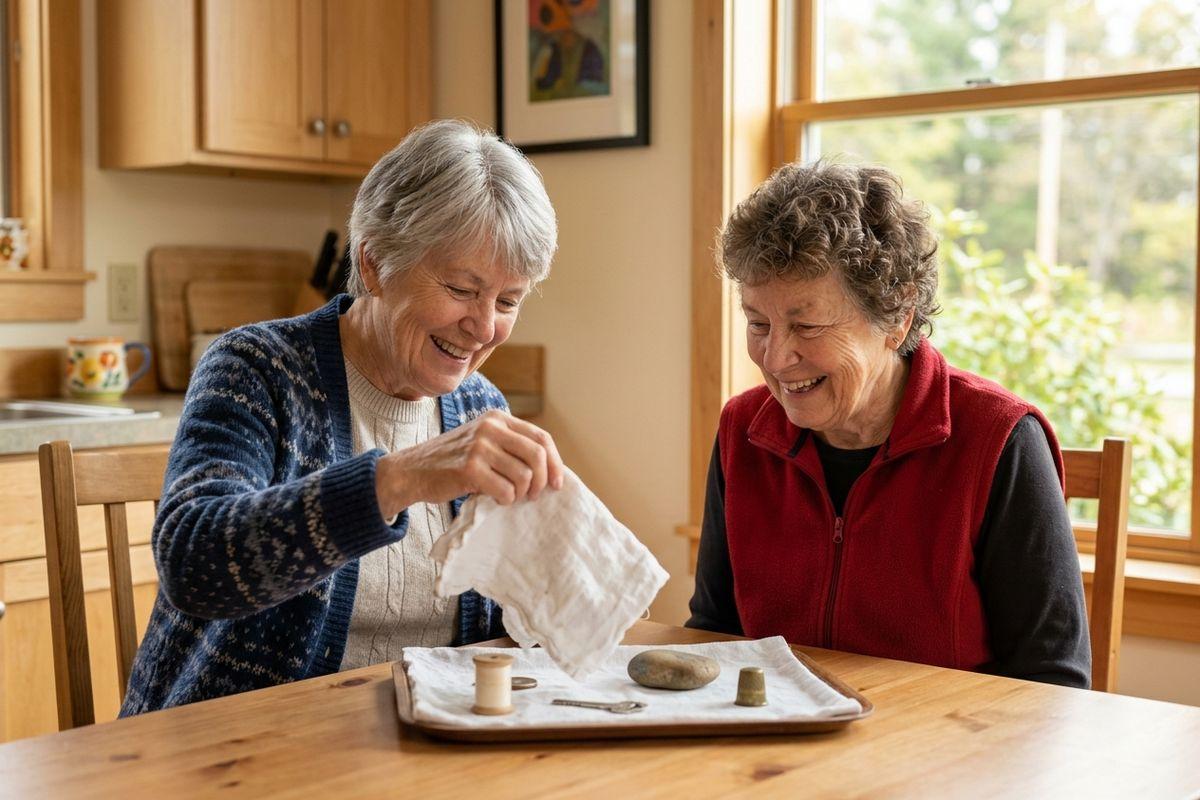
Simple senior-friendly memory games can be set up with items already around the house. One option is to place several familiar objects on a tray, cover them after a short look, and see how many can be recalled. Cards can also be placed face down and turned over in pairs to create a matching game. The number of objects or cards can be adjusted so the activity stays comfortable instead of frustrating.

Other Ways to Keep a Senior’s Mind Active
Brain games are one option, but mental engagement can also come from ordinary hobbies and routines. Activities that involve learning, creating, moving, or connecting with others can add variety to the day.
Older adults can also stay engaged through activities such as:
- Reading books, newspapers, or magazines
- Cooking or following a favorite recipe
- Painting, knitting, scrapbooking, or other creative hobbies
- Listening to music or playing an instrument
- Gardening or caring for plants
- Walking or taking part in other physical activities
- Spending time with friends, relatives, or neighbors
Not every activity needs to be chosen for a specific benefit. Interests that feel familiar, enjoyable, and worth returning to can make an active day feel much more natural.
Staying Mentally Active at All American Assisted Living at Hanson
Brain games for seniors can be as simple as finishing a crossword, dealing a hand of cards, or testing everyone’s knowledge with a few trivia questions. With so many options available, older adults can choose activities that match their interests and switch things up whenever they want something different.
At All American Assisted Living at Hanson, we understand that an engaging day includes more than assistance with daily needs. Time for hobbies, conversation, activities, and relationships can all help make community life feel fuller and more personal. Schedule a tour of All American Assisted Living at Hanson today to learn more about our community and daily activities.