
Key Takeaways
- Small, thoughtful changes at home often help more than big renovations.
- Bright, even lighting and softer background noise support calmer days.
- Contrasting colors help objects like doors, railings, and toilet seats stand out.
- Clear floors, grab rails, and labeled cupboards support safety and independence.
- Signs, large-display clocks, and audio reminders make routines easier to follow.
How a Familiar Home Can Support a Loved One With Dementia
There are little changes that you’ve noticed in your loved one. A favorite mug that’s suddenly hard to find, the hesitation at the top of the stairs. If they’re living with dementia, it’s likely that your loved one isn’t perceiving home the same way as before. Our team at All American Assisted Living at Hanson hears about these moments from families every day.
Much like a memory care community, a dementia-friendly home can provide both safety and comfort. All it takes is a few simple adjustments to lighting, color, sound, and layout. This makes daily tasks easier so your loved one can keep doing more on their own.
How Home Design Shapes Daily Life With Dementia
The layout of a room quietly influences how comfortable and calm someone feels in it. A cluttered hallway can feel like an obstacle course. On the contrary, a clear path from the bedroom to the bathroom invites someone to move on their own.
You don’t need contractors or a remodeling budget. Simply moving a chair, swapping a light bulb, and adding a picture label to a drawer can make a big difference. Small setups like these can also work alongside other daily living aids for seniors.
Take it slow. Introduce one or two changes at a time. That way, your loved one has room to adjust. It’s also helpful to know the stages of dementia progression so you can anticipate what might be useful next.
Light, Sound, and Color Choices That Help
Brighter, Even Light
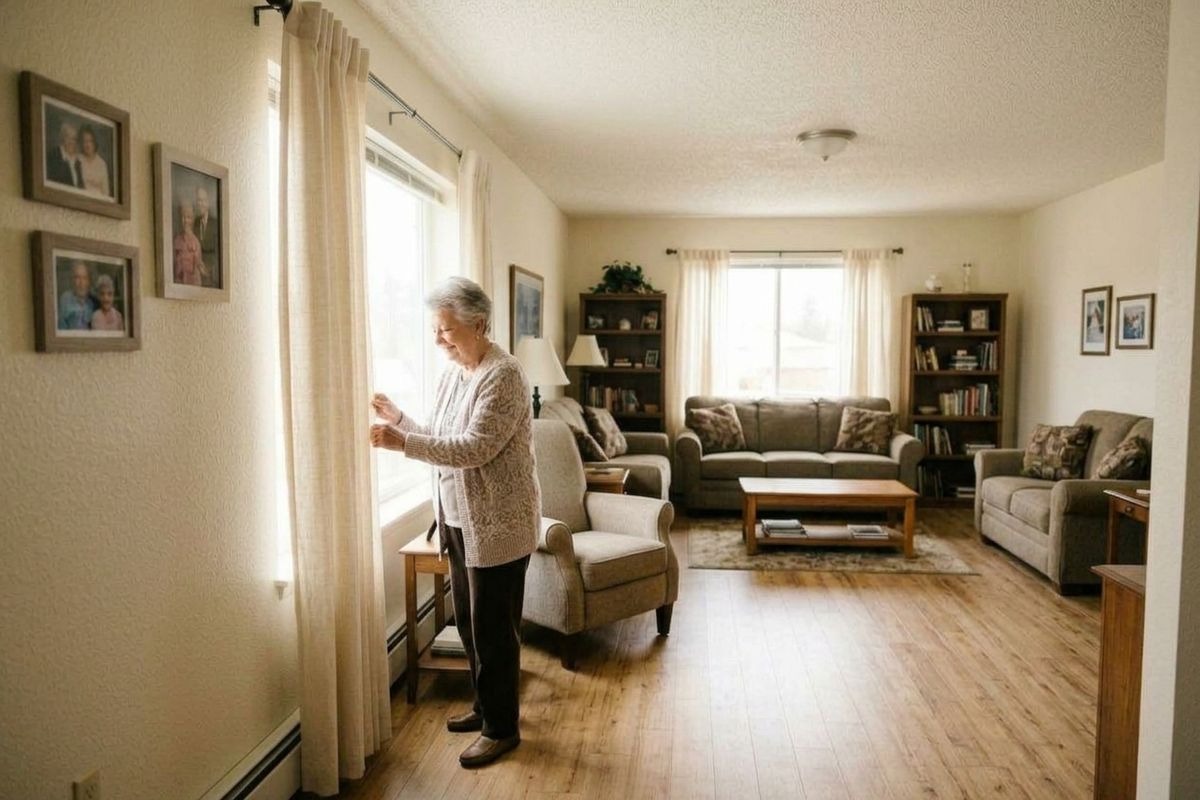
Open the curtains wide in the morning. Trim back any hedges shading the windows. Natural daylight tends to fill a room more evenly than a single lamp in the corner.
Motion sensor lights can work well in hallways and bathrooms. A midnight trip shouldn’t start with fumbling for a switch. At night, a dark bedroom helps signal that it’s time to rest. These environmental cues support healthy sleep as your loved one ages.
Less Background Noise
Competing sounds can make conversations tiring. Soft furnishings like curtains and cushions absorb echo and soften a room’s acoustics.
Turn off the TV or radio when nobody’s watching or listening. And keep up with regular hearing checks. Clear hearing makes everyday chatter easier to follow.
Colors That Contrast
Contrast helps objects stand out. Aim for walls that differ clearly from the floor and from the furniture that sits against them.
- Choose a toilet seat in a color that contrasts with the bowl and floor
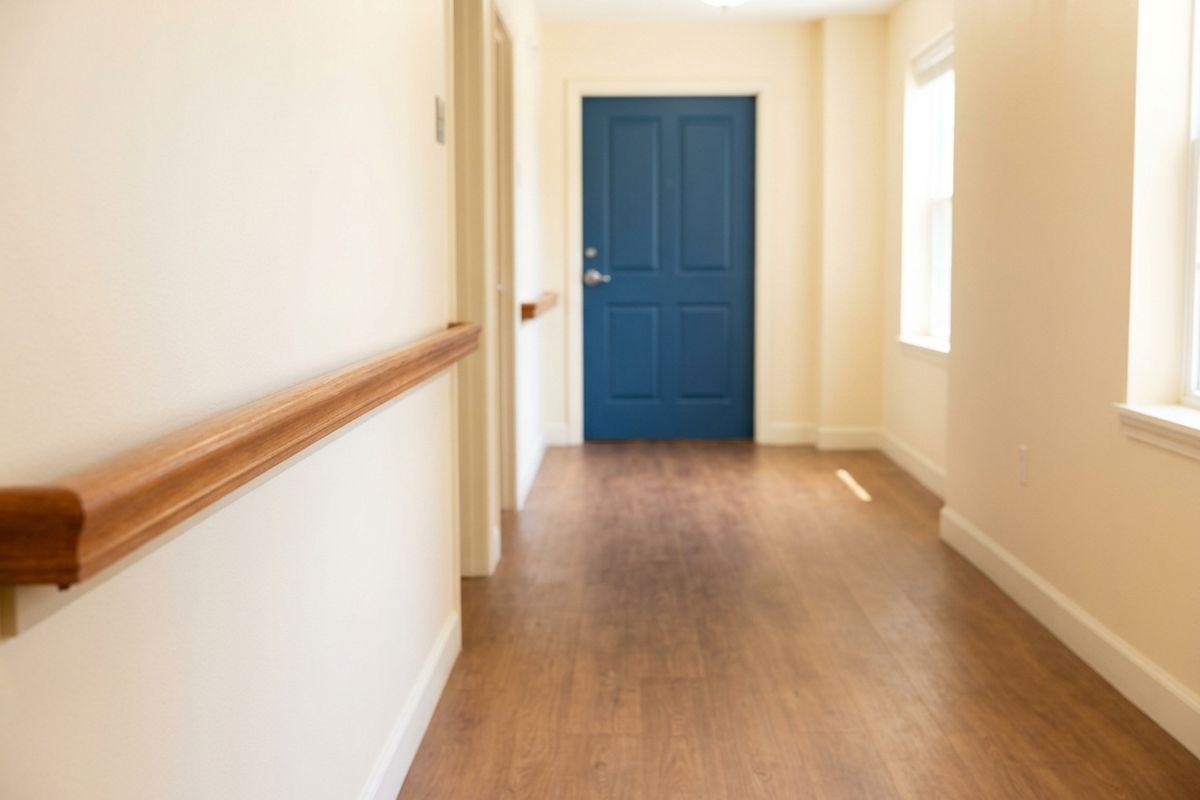
- Paint doors a shade that stands apart from surrounding walls
- Pick banisters and handrails that are easy to spot
- Skip bold patterns, stripes, and busy prints
Safety Updates for Every Room
Floors and Walkways
Rugs and mats are easy to catch a toe on. Consider removing them to clear the way. Some highly polished floors can look wet, and that may cause hesitation mid-step. That’s why some families give their floor a matte finish, which tends to give a bit more reassurance. These small shifts play a real part in fall prevention at home.
Keep the routes between rooms open. A clear path from the armchair to the kitchen not only promotes safety, but it also encourages independence.
Kitchen and Bathroom Touches
These two rooms see the most activity. A few adjustments go a long way.
- Install grab rails beside the toilet and tub
- Add photo labels to drawers and shelves
- Choose stable tables with rounded edges
Mirrors and Reflections
A reflection can sometimes be unsettling. If a mirror causes distress, covering it or moving it to a less-used spot can help ease the anxiety.
Also, try closing the curtains after dark to soften window reflections. This keeps evenings calmer and reduces the urge to wander.
Simple Tools That Support Independence
Everyday items can carry a lot of helpful information when you set them up thoughtfully.
- Signs and picture labels on doors, drawers, and cupboards
- Clocks with large displays showing the day and date
- Big-button phones and remotes
- Audio reminders for medications and daily routines
Outdoor Spaces Worth a Visit
Fresh air lifts the mood. Level walking surfaces with handrails make a garden stroll feel doable and refreshing. If possible, you can set up secure gates for extra peace of mind.
Add a sheltered bench for shade on warm afternoons. Raised garden beds and bird feeders can give your loved one a reason to step outside.
What You and Your Family Can Do
Start with one room. Choose the space your loved one uses most and make a couple of adjustments. Then see how it feels before moving on.
There are options if the days start asking more than what one household can give. All American Assisted Living at Hanson offers memory care, assisted living, and respite care. Our team supports independence at every turn.
Reach out to us today and tour the community together. You and your loved one are welcome anytime. And we’d love to show you how bright senior living can be.