
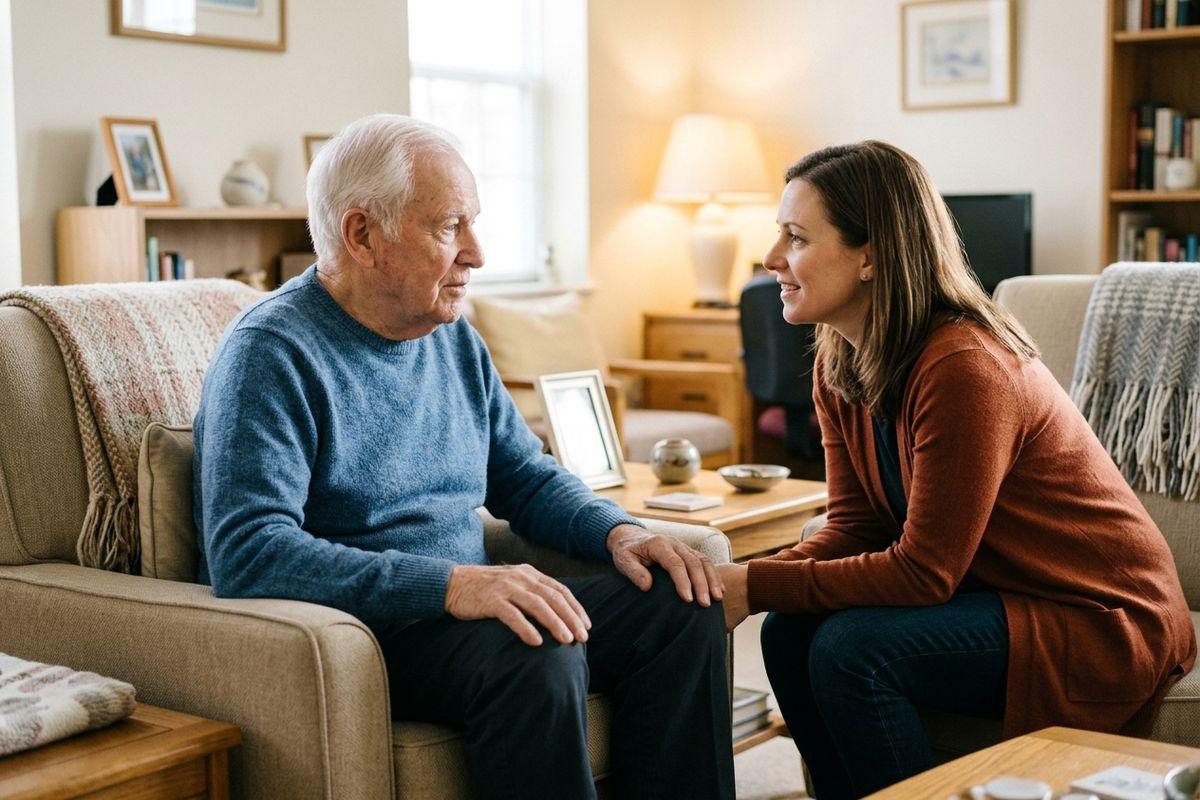
Key Takeaways
- Words carry real weight for someone living with dementia, so choosing them with care makes a difference.
- Short, warm, and reassuring phrases help your loved one feel safe and understood.
- Avoid correcting, quizzing, or overwhelming them with choices.
- When they want to “go home,” redirect gently by focusing on the feeling behind the request.
- Memory care communities offer trained caregivers who understand dementia communication every day.
The Power of Words with a Loved One Who Has Dementia
Watching someone you love navigate dementia can feel overwhelming, especially in those moments when you’re not sure what to say. You want to connect, to comfort, to bring a little light into their day. But sometimes the words just don’t come easily, and that’s completely understandable.
The good news is that with a few simple, thoughtful approaches and some support along the way, you can make your conversations feel warmer, calmer, and more meaningful for both of you. It’s not about saying the right thing every time. It’s about showing up with kindness and meeting your loved one where they are.
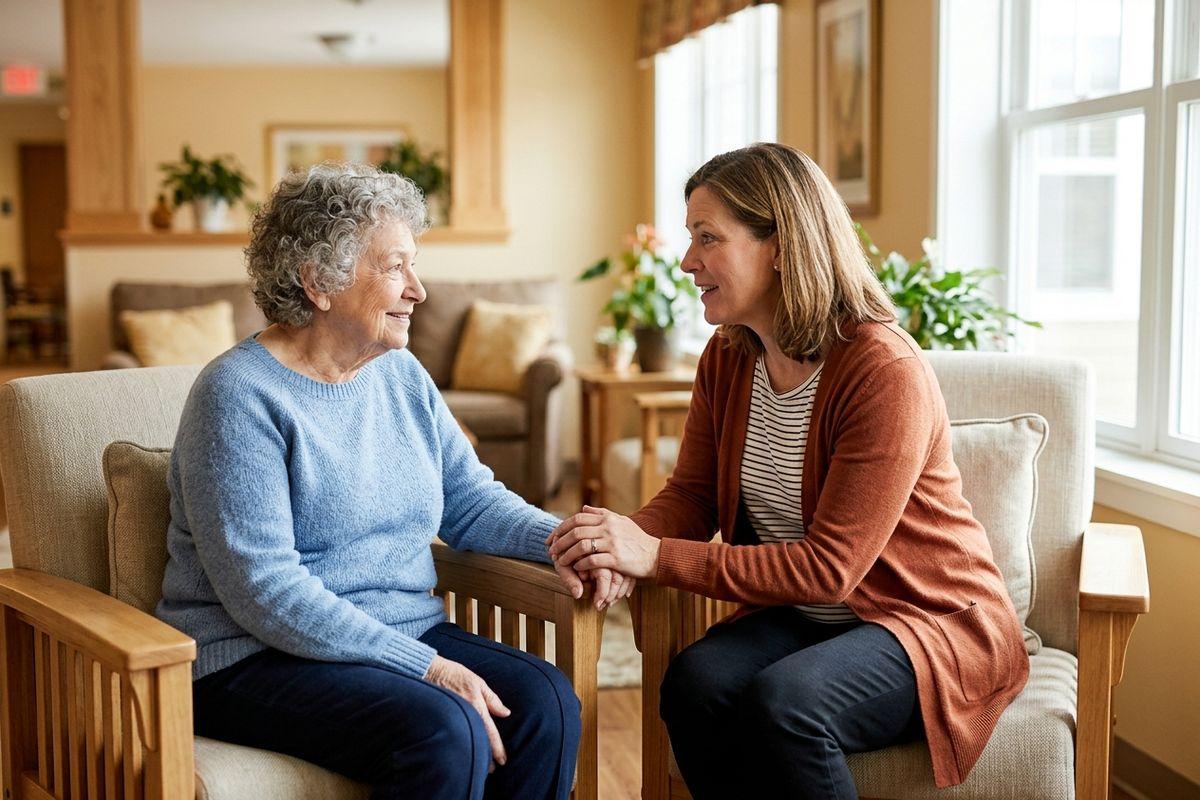
Helpful Things to Say to Someone with Dementia
Start with Open-Ended, Low-Pressure Questions
Long-term memories tend to stay vivid for people living with dementia, even when short-term recall becomes more difficult. Asking about family, hobbies, or meaningful experiences from the past can open the door to joyful conversations. A simple prompt like “Tell me about your daughter” invites warmth without putting anyone on the spot.
If your loved one seems to struggle with an open-ended question, gently offer 2 options to make things easier. Something like “Would you like to sit outside or stay in here?” gives them a sense of choice without feeling overwhelmed. Keeping things low-pressure helps your loved one feel comfortable rather than anxious.
Use Short, Simple, and Reassuring Phrases
Dementia can affect how the brain processes language, so shorter sentences tend to land better than long, complicated ones. When something is misplaced or confusing, a phrase like “I’ll keep my eyes open, and we’ll find it together” is calm, collaborative, and reassuring. It shifts the mood from stress to teamwork.
Validating feelings rather than correcting facts makes a big difference. If your loved one says something that isn’t quite accurate, focusing on how they feel rather than what they said keeps the connection going. A warm tone and a gentle touch can say more than any perfectly chosen word.
Relate and Encourage Without Putting Them on the Spot
When your loved one forgets something or feels embarrassed, a simple “That’s happened to me before!” can ease any frustration and reduce feelings of shame. It normalizes the moment and reminds them that they’re not alone. Small gestures of empathy go a long way.
You can also remind them of their strengths and things they’re proud of. Asking for their opinion on something familiar, like a family recipe or a favorite song, keeps them engaged and valued. It’s a lovely reminder that who they are goes far beyond what they can or can’t remember.
Three Things to Avoid When Talking to Someone with Dementia
Don’t Correct, Argue, or Quiz
Phrases like “Do you remember when…?” can unintentionally put your loved one in a difficult position. When they can’t recall something, it can lead to frustration or sadness. Stepping away from quiz-style questions helps keep the conversation light and connected.
Correcting a false belief, even kindly, rarely brings comfort and can sometimes increase distress. Saying “No, that’s not what happened” doesn’t often help anyone feel better. Instead, focus on the emotion behind what they’re saying and respond to that. For more guidance on phrasing, our team at All American Assisted Living at Hanson has helpful tips on what to avoid.
Don’t Use Commands or Overwhelming Choices
A direct command like “You need to shower now” can feel jarring and spark defensiveness. Framing the same task as a shared activity, like “How about we get you freshened up together?”, feels much gentler. It gives your loved one a sense of partnership rather than pressure.
Offering one simple option at a time, rather than a long list, helps your loved one feel capable and in control. Small adjustments in how you phrase things can transform a tense moment into a calm and cooperative one. Learning how to talk to someone with dementia takes practice, but even small changes can make a noticeable difference.
How to Respond When Someone with Dementia Wants to Go Home
What “Home” Really Means to Them
When your loved one says they want to go home, they’re often expressing a longing for safety, comfort, and familiarity. Arguing about where home actually is tends to increase distress rather than ease it. Asking what they loved about home can help you understand the feeling behind the words.
How to Redirect and Reassure Gently
A favorite photo, a familiar song, or a short walk can gently shift their focus. A reassuring phrase like “You’re safe here, and I’m right here with you,” paired with a gentle hand squeeze, can be deeply comforting. You don’t always need the right answer; sometimes your presence is enough.
How Memory Care Support Can Help Your Family
You don’t have to figure all of this out on your own. Memory care communities are home to trained caregivers who understand dementia communication and practice it every day. They create structured, calm environments where residents feel safe, supported, and genuinely cared for.
At All American Assisted Living at Hanson, the memory care team is dedicated to helping your loved one thrive with compassion and respect. Knowing that your family member is surrounded by people who truly understand their needs can bring real peace of mind. Reach out today to learn more or to schedule a tour.